Poe-bird, New Zealand
1777
Engraving on paper
220 x 175mm
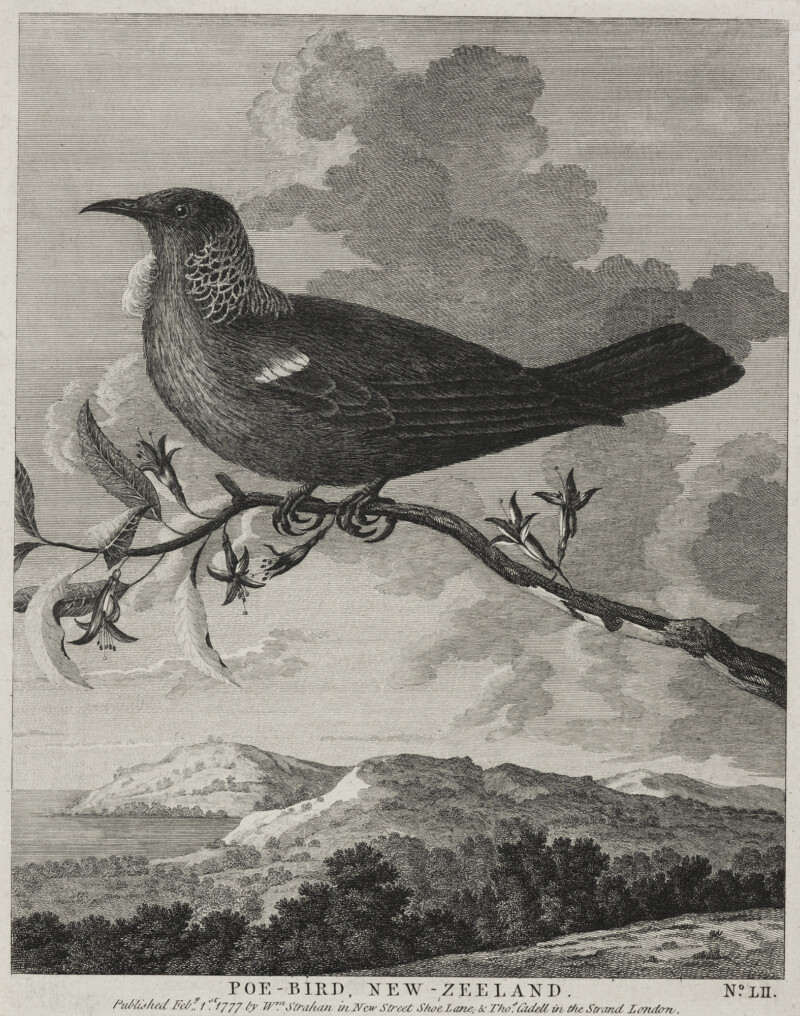
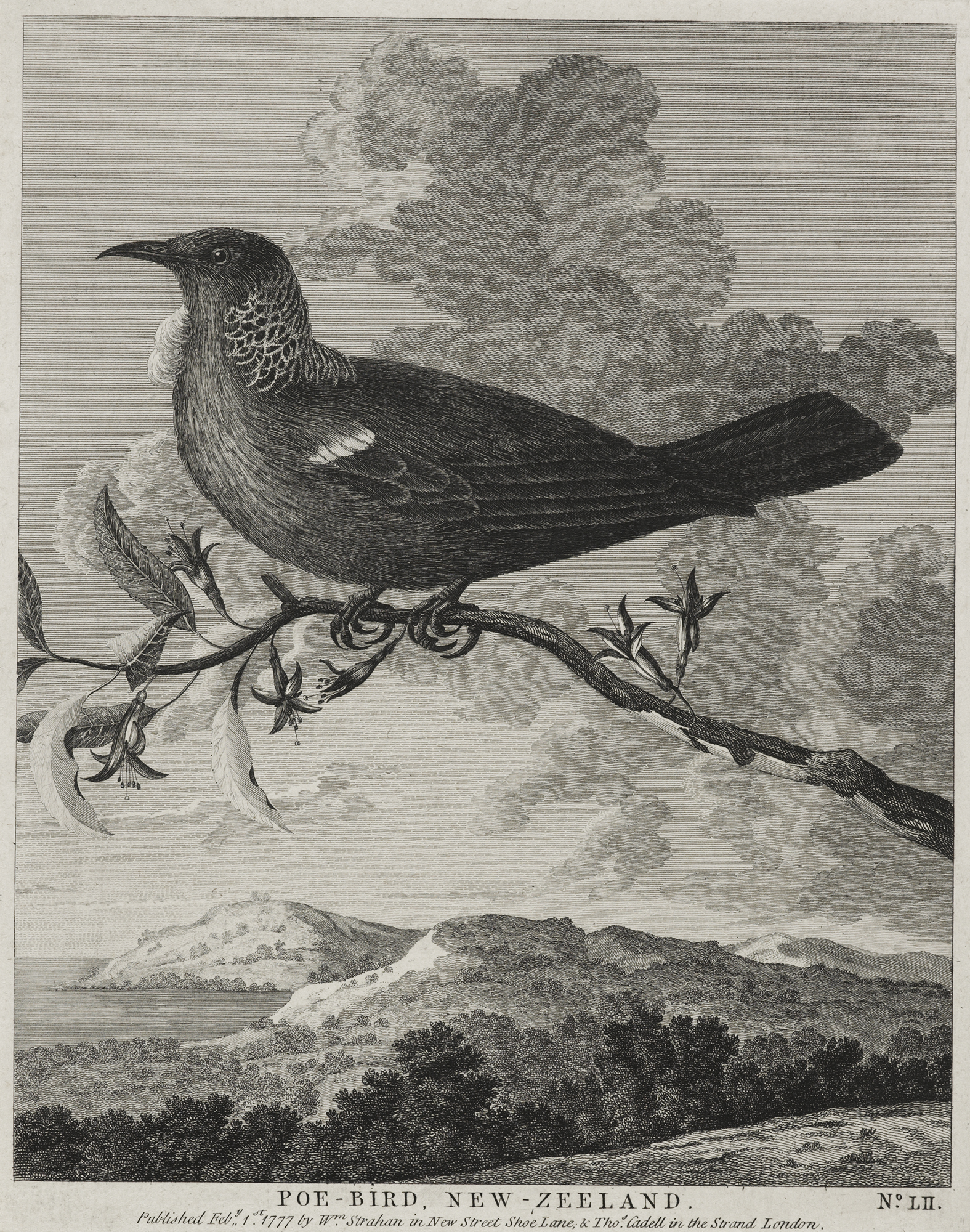
Original title: ‘Poe-bird, New-Zeeland’. Plate No. LII from James Cook, A Voyage Towards the South Pole, and Round the World (London: W. Strahan and T. Cadell, 1777). Other plates from the series can be viewed here.
This engraving depicts a tūī (Prosthemadera novaeseelandiae), sometimes called the parson bird. It is often assumed to be after a drawing by Johann Georg Adam Forster or William Hodges. Cook and his crew called the tūī the poe-bird, or poy-bird. In A Voyage Towards the South Pole, and Round the World, Cook wrote:
‘The poy-bird … [has] feathers of a fine mazarine blue, except those of its neck, which are of a most beautiful silver-grey, and two or three short white ones, which are on the pinion-joint of the wing; under its throat hang two little tufts of curled snow-white feathers, called its poies, which being the Otaheitean word for ear-rings, occasioned our giving that name to the bird; which is not more remarkable for the beauty of its plumage than for the sweetness of its note; the flesh is also most delicious, and was the greatest luxury the woods afforded us.’

Provenance
2025–
Fletcher Trust Collection, purchased from Art + Object, Tāmaki Makaurau, 9 December 2025, lot 94
?–2025
Unknown