STEWART, Helen;
At the Bay
c.1946
Oil on board
620 x 750mm (image); 770 x 900mm (frame)
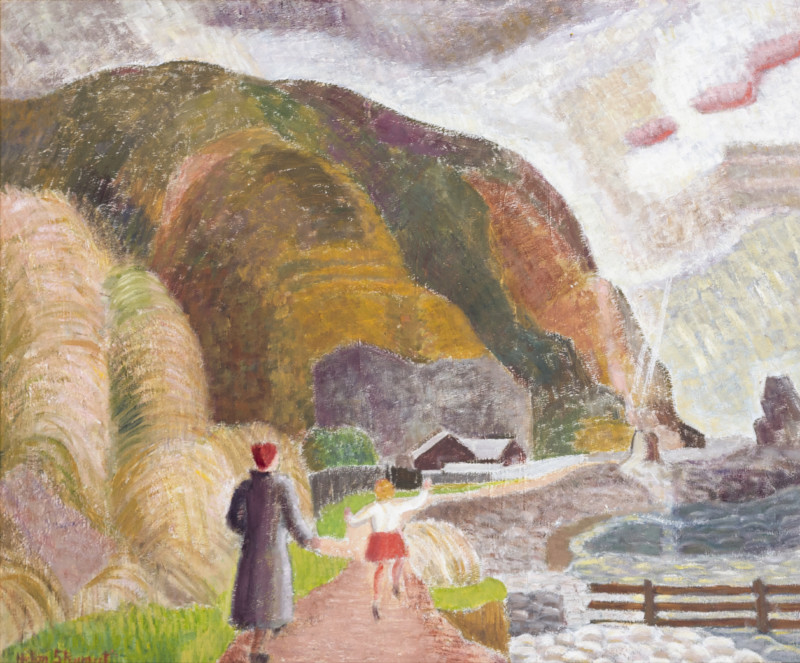
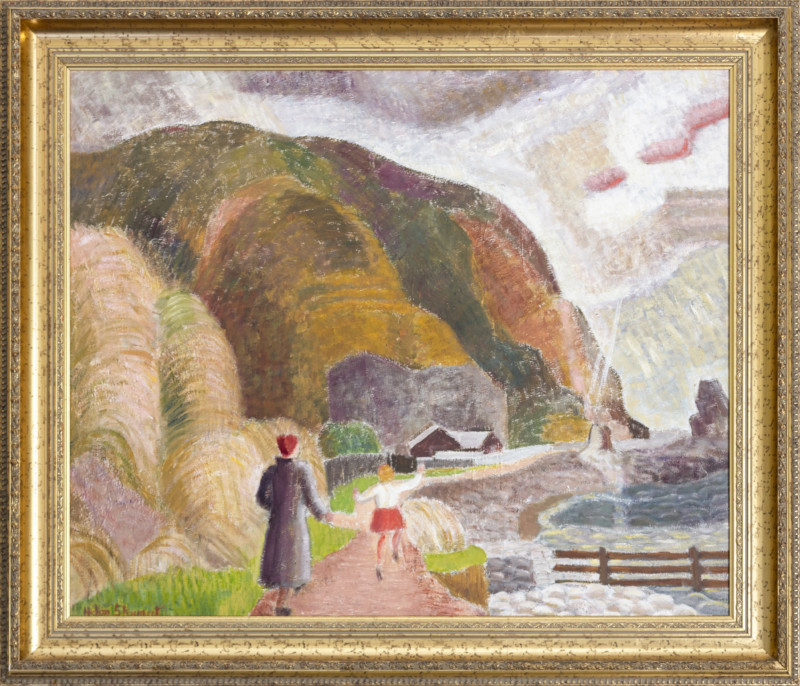
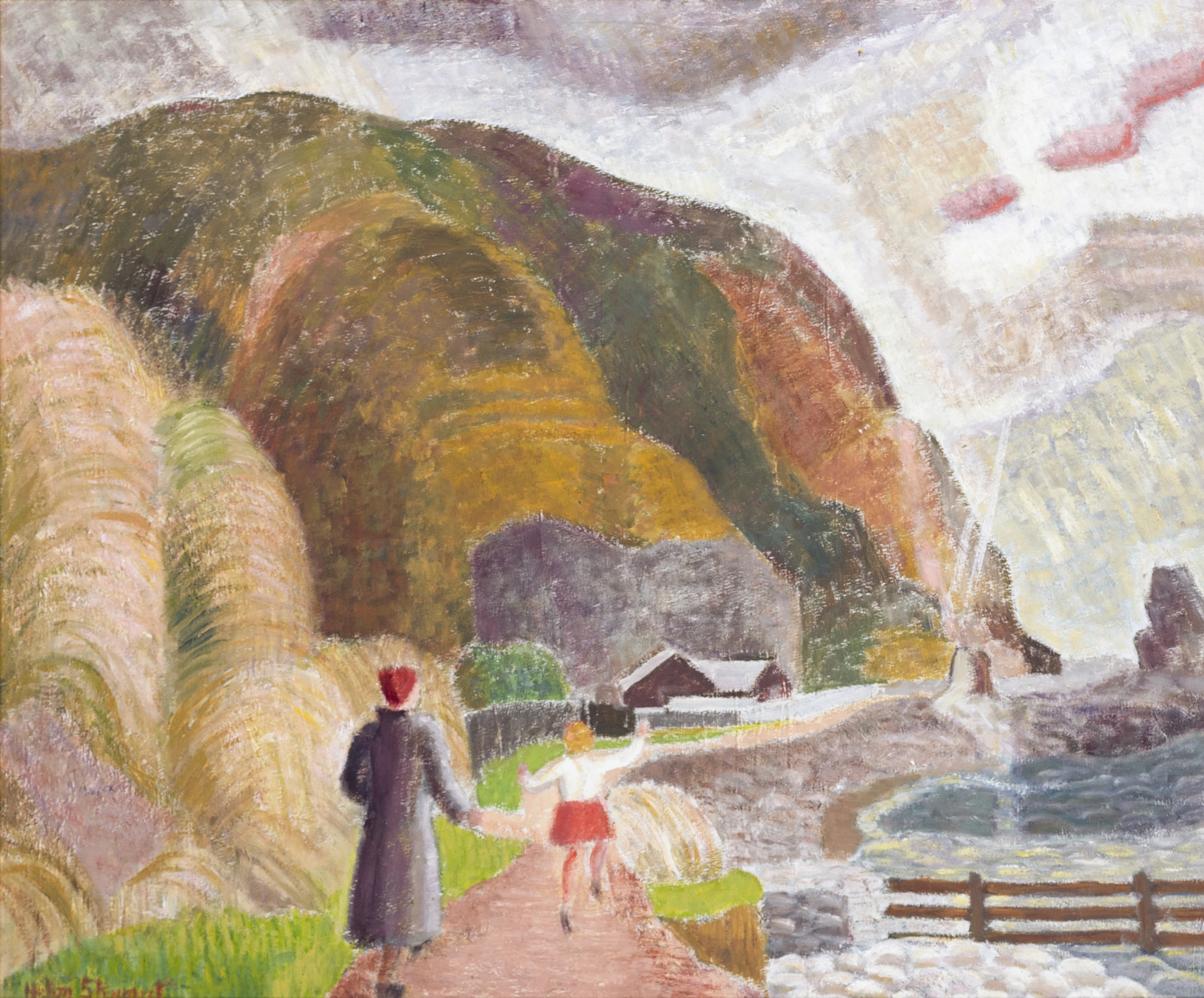
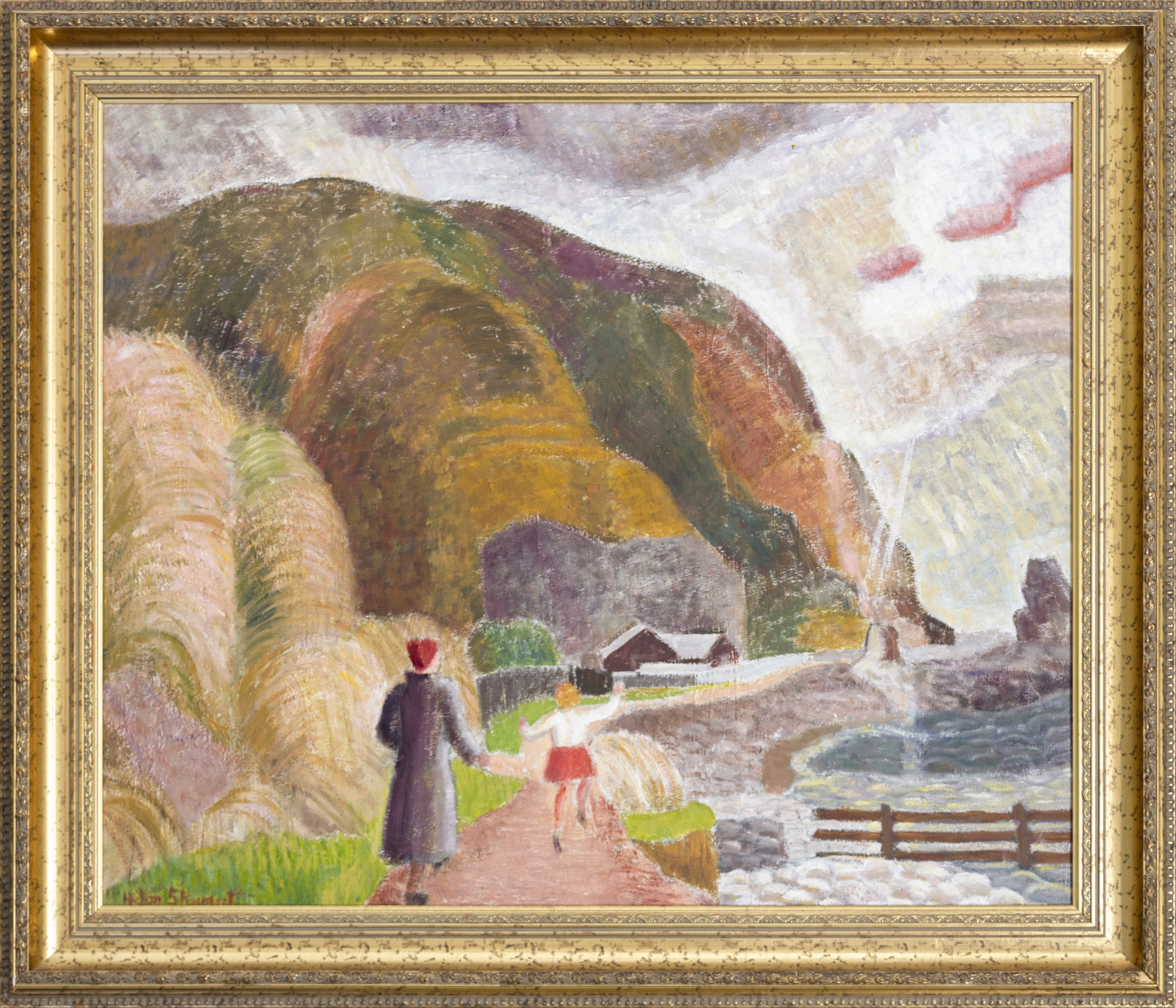
Helen Stewart’s early career was firmly established in Australia, where she moved with her family in 1928. In 1946, family commitments brought her back to Wellington and she lived at Lowry Bay for the rest of her life. Disappointed at the lack of interest here in the modernist experimental work she had been encouraged to produce in Sydney, she was deeply hurt when the New Zealand Academy of Fine Arts rejected her paintings. Damian Skinner has observed:
‘Her second show takes place in the Wellington Central Library in 1949. The reviewer finds in “the majority of cases, the crudeness of composition, draughtsmanship and colour effects indicates the beginner of promise, whose need is the guiding hand of one more experienced in art.” This, to a 49 year old woman who had studied art in Europe and Australia.’[1]
Things were to change with the emergence of more progressive galleries in Te Whanganui-a-Tara, including the Helen Hitchens Gallery, established in 1949, and the Architectural Centre Gallery, established in 1953. Fortunately, Stewart lived to see her work achieve both critical and public success.
It is most unlikely that the artist was unaware of the Mansfieldian allusion behind the title for this work. Although the painting does not show Day’s Bay, where the famous story was set, the hills at Muritai where Stewart’s woman and child walk are nearby and fall at a sharp angle towards the sea.
[1] Damian Skinner, ‘Making Modernism: Helen Stewart and the Wellington Art Scene 1946–1960’, Art New Zealand 26 (Autumn 2008), https://art-newzealand.com/96-stewart/

Inscriptions
Helen Stewart [l.l.]References
Peter Shaw, Why Go to the Riviera: Images of Wellington (Tāmaki Makaurau: Godwit, 2003), 122–23.
Provenance
1986–
Fletcher Trust Collection, purchased from Brooker Gallery, Te Whanganui-a-Tara, August 1986
–1986
Unknown